

About Flixbus
Founded in Munich in 2013, Flixbus has grown into one of the world's largest intercity travel networks in just over a decade. Operating on an asset-light technology model, the company has transported more than 81 million passengers across 40 countries in 2023 and the parent company, Flix, crossed €2 billion in company valuation for the first time that year.
The Challenge: Travel Demand is Situational
Unlike retail or subscription categories, where advertising can generate demand by introducing a product someone didn't know they needed, travel brands are largely dependent on capturing demand that already exists.
Nearly 70% of people use search engines to plan their travel. which means the race for a customer is mostly won or lost at the moment they open Google with a destination in mind (Google & Ipsos MediaCT, 2012). By that point, brand consideration has already narrowed.
Vyara Karapachova, Gift Card Manager at Flixbus, describes the constraint clearly: "For a travel brand like Flixbus, usage is often situational. People book travel when they need it, not necessarily when they discover your brand."
The distinction Karapachova draws is between passive brand discovery and active spend intent.
"Through all of these apps - through the banking apps, through the reward platforms, or the corporate benefit platforms. We're reaching customers before they've even decided how or when they want to travel. This creates a completely different entry point for us."
Reaching Customers At The Point of Spend
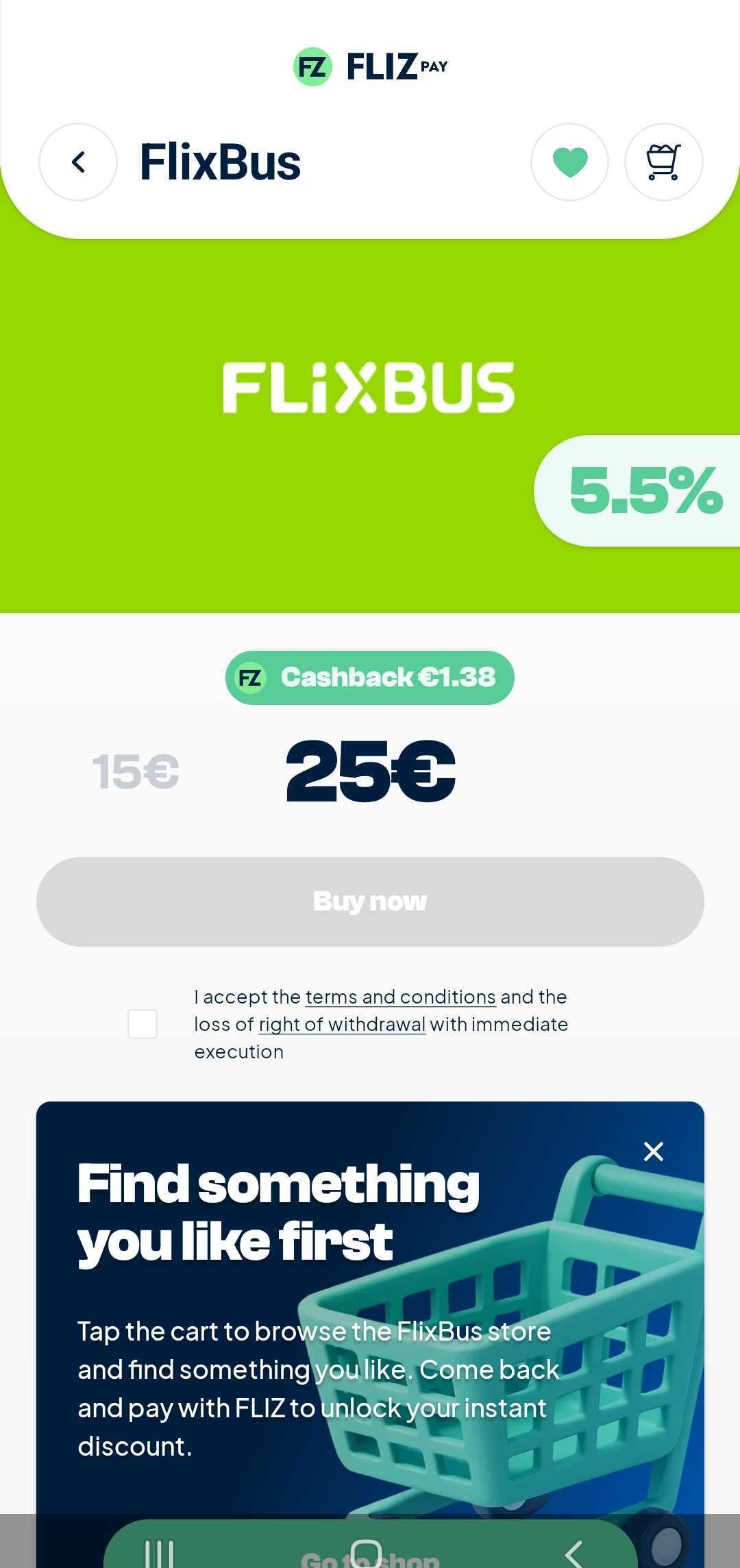
So rather than a user scrolling past a Flixbus ad on Instagram, they are inside an app they open every day, looking at €12 of platform-subsidized cashback they have built up, and Flixbus is one of the brands they can spend it on. The refer-a-friend feature on our partner app extends that cycle further. When a user refers someone to the platform, both parties receive boosted cashback on their next gift card purchase, a higher rate than the standard offering, applied automatically.
A user checking their cashback balance on a Tuesday, weeks before any trip is planned, sees Flixbus as one of the brands they can spend their rewards on. They are not being targeted by an ad. The interaction feels less intrusive for the user.
A New Type of Flixbus Customer
finperks also introduced Flixbus to a segment its existing acquisition channels weren't reaching. Banking apps and digital reward platforms skew toward younger, digitally native users which are people who are comfortable spending online, manage their finances through apps, and engage regularly with cashback and rewards features.
The Gen Z travel numbers, spending an average of $11,766 annually on travel, more than any other generation, and nearly 60% taking two or more holidays in 2025, the highest of any generation. (Squaremouth, cited in CNBC, 2025; Perk, 2026)
We are changing this with finperks: "We are now reaching a new type of user who is typically younger, very digital, and very comfortable with spending online, but they're not essentially coming through our direct acquisition channels."
For Flixbus, that represents incremental reach, not cannibalising the audience it was already converting, but adding a segment that hadn't previously been part of the gift card program's footprint at all.
Low-risk Revenue Expansion
Beyond the audience question, Karapachova is clear about how she would frame the finperks model for other brands evaluating similar partnerships. "I would describe it as a very efficient and low-risk way to expand your reach, drive incremental revenue, and explore new opportunities within the gift card industry."
The low-risk framing reflects how the distribution model works in practice.
Flixbus doesn't need to build relationships with individual banking or fintech platforms, manage separate integrations, or negotiate terms across a fragmented ecosystem. finperks handles the distribution layer, the brand relationships, the technical integrations, and the placement across its partner network. What Flixbus gains is access to an already-engaged audience across multiple channels through a single partnership.
Incremental Customers, Not Cannibalised Ones
For brands where new customer acquisition is expensive and the competition for paid search intent is intense, that reach matters. Gift card distribution costs two to three times less per acquired customer than a standard digital advertising campaign, and the customers it delivers tend to convert with higher intent: 44% of gift card recipients spend more than the card's value at the point of redemption, with a further 48% spending the full amount.
This case study is based on an interview with Vyara Karapachova, Gift Card Manager at Flixbus.