A shopping cashback app usually lives on affiliate commission. A shop pays for a referred sale, the app keeps part of that payment and passes the rest to its users as cashback. The weak spot is obvious: the commission rate belongs to the shop or the affiliate network, not to you.
Gift card margin arbitrage adds a second income line that you can plan yourself. Your app sources digital gift cards below their face value, offers them to users at full value, shares part of the difference as cashback and keeps the remainder. How large that difference is depends mainly on where each card is sourced. In this way, gift card margin arbitrage can turn consumer spending inside your app into a revenue channel of its own.
This guide is meant for product leaders, CPOs and partnership heads at cashback and shopping rewards platforms. It covers the business case behind the spread, the supplier side, the store design, gift card payouts, a short illustrative case study, the right metrics and the gift card API integration with finperks, a prepaid orchestration layer that gives platforms access to 1,000+ brands in 30+ countries.
Why Affiliate Income Alone Leaves a Cashback App Exposed
Someone else sets your rate
In an affiliate model, the shop or the network decides what a referred sale is worth. Rates can change from one month to the next, and your app has little room to negotiate. Your margin is therefore borrowed from terms you do not control.
That dependence shapes your product roadmap too. When a large partner cuts its rate, your cashback offer may need to shrink, even though nothing changed on your side. A second source of revenue can soften those swings.
Tracking gaps and slow confirmation
Affiliate revenue only arrives when a purchase is tracked and later confirmed. Ad blockers, switched devices or returns can mean that a sale never turns into commission. Users may still expect their cashback, which leaves your support team to explain the gap.
Payment timing adds another layer. Commission is often paid only after the shop has confirmed the order, so revenue lags behind the activity in your app. Planning cash flow around that delay takes effort.
What a second income stream needs to offer
A useful addition for a cashback platform should fit the habits your users already have. It should create margin at the moment of the transaction, not weeks later. And it should scale without increasing headcount in engineering or operations.
Selling gift cards inside the app can meet those three conditions. Users already understand cashback, the margin is known when the order is placed, and the sourcing can sit with an infrastructure partner. The rest of this article looks at how that works in practice.
A store like this can also support customer engagement. Users who open the app to check their cashback balance find a place to spend it right there, and gift card APIs can enhance user engagement and retention when the store feels like a natural part of the product instead of an add-on.
Gift Card Margin Arbitrage, Explained Simply
Where the discount comes from
Brands grant wholesale discounts to the partners that distribute their cards. That discount is the supplier commission, and it is the raw material for every cashback offer in a gift card store. Gift card margin arbitrage simply means using the price differential between the acquisition cost of a card and its face value.
Because the sale happens inside your own app, no tracking link is involved, so gift card transactions can allow your app to capture revenue with little tracking loss. For a cashback business used to affiliate attribution, a gift card margin model can offer more predictable unit economics than affiliate marketing.
How the spread can be split
As an illustration: with an average gross commission of about 5% across the finperks catalog, your platform would pay roughly €95 for a €100 card. You might hand €3.50 of that margin to the customer as cashback and keep €1.50. On everyday brands you could keep a larger share and pass more through during a campaign.
Your cashback app retains part of the wholesale discount while offering customer cashback, so the split is a product decision with a direct effect on margin. Some platforms may prefer a generous headline rate to stand out, others may protect their own margin and use promotions selectively. Either way, the numbers are visible per order, which gives your team a clear basis for cashback pricing.
Where top brands leave more room
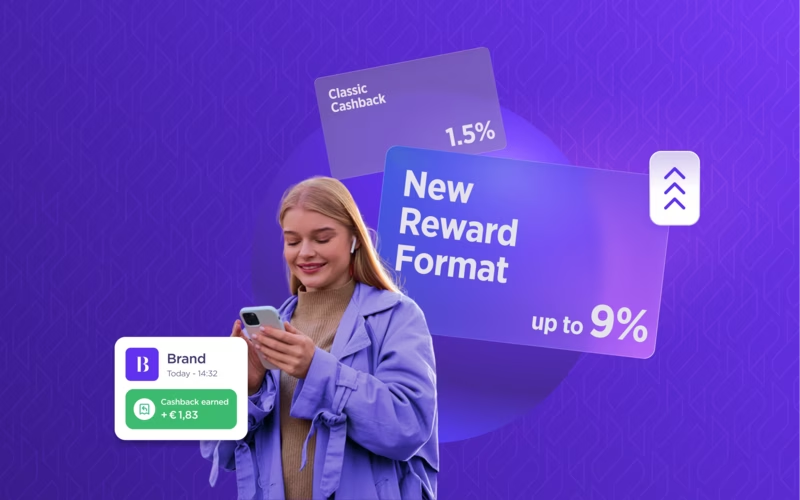
The commission is not the same for all gift card brands. On a selection of top brands, the wholesale margin can be wide enough to fund consumer cashback of up to 9% and still leave your store a share of each sale. Those brands can carry featured placements or seasonal promotions.
Other brands may leave a thinner margin, which still adds up across volume. A balanced catalog usually mixes both. Your team decides which brands carry the highlight rates and which simply complete the offer.
Why sourcing decides the size of the spread
The same brand can come with different wholesale conditions depending on the supplier and the country. A platform that buys from one source only ever sees one rate. The arbitrage, in the real sense of the word, sits in choosing the best available source for each order.
Across thousands of orders, a small difference per brand can turn into a noticeable share of store revenue. That is why the supplier side deserves as much attention as the store design. The next section looks at what happens when a cashback app tries to build it alone.
The Hidden Cost of Building the Supplier Side Yourself
One country, one contract
Without orchestration, entering a new market usually means finding a single distributor there, negotiating terms and running a legal review. The technical integration often repeats, because each source has its own API and catalog format. For a cashback platform active in multiple markets, those projects pile up.
Each relationship also brings its own brand list. If a brand your customers want is missing from that one distributor, your store simply cannot offer it. Coverage then depends on the agreement you happened to sign first.
Settlement cycles and counterparty risk
Every supplier sends its own invoices on its own schedule. Your finance team has to reconcile each one, often in different formats and currencies. The effort grows with every source you add.
There is also a counterparty risk attached to each relationship. If you prepay or hold a balance with several gift card providers, your exposure is spread across many agreements that all need monitoring. That is a real operational cost, even if it never appears in a product roadmap.
Margin risk that grows with every market
A single distributor per country means one fixed price per brand. Whenever another source has better conditions for that brand, the difference stays with someone else. Over time and across markets, that margin risk compounds.
Businesses that source across several suppliers can capture exactly that difference. They may then afford a higher cashback rate or a better margin at the same rate. In a category where users compare offers, that gap can matter.
How finperks Works Behind a Cashback App
A supplier network behind one REST API
finperks is B2B infrastructure for platforms, not a gift card shop and not a consumer brand. Behind one REST API sits a network of suppliers. Epay covers DACH and Cadooz Germany, Epipoli serves Italy, Buybox Spain and Portugal and Amilon Scandinavia, while BHN adds the USA and exclusive brands, and InComm and BrilliApp complete the network.
Your developers work against one gift card API, whichever supplier ends up fulfilling an order. This system is the gift card infrastructure layer of your store and covers sourcing, pricing per country, gift card issuance and settlement. A gift card API like this can enable instant digital gift card issuance and reduce operational complexity by automating issuance, while your team keeps full control of everything the customer sees.
Routing each order to the best available margin
For every API request, finperks compares the conditions available for that brand in that country and routes the order to the best margin automatically. You do not need to maintain price lists for each supplier. The routing runs in the background while your store shows one consistent catalog.
This is where the arbitrage effect comes from at scale. Instead of accepting one distributor’s price, your platform can benefit from the best available rate across the network.
When a supplier is unavailable
Outages happen in any supply chain. With finperks, for brands available through more than one supplier, orders switch automatically to the next available supplier. Your store can keep selling those brands while one source is down.
For a cashback app, this protects the customer experience as well as revenue. A brand that suddenly disappears from the store can cost trust. Redundancy on the supply side helps avoid that.
Single distributor versus orchestration at a glance
The table below summarises how the two models compare for a cashback platform. It focuses on the points that affect margin and operations.
| Area | A single distributor per country | finperks orchestration |
|---|---|---|
| Price per brand | One fixed rate | Best available rate across the network |
| New country | New search, contract and integration | Activated under the existing agreement |
| Settlement | One cycle and one counterparty per supplier | One settlement |
| Supplier outage | Brand unavailable | Automatic switch for brands with more than one supplier |
| Catalog depth | Limited to one source | 1,000+ brands in 30+ countries |
Designing the Gift Card Store Inside Your App
Where the store sits in the customer journey
Your app decides where the store appears. It could sit next to the cashback balance, on the home screen or inside the payout flow. Placement matters, because users should find it at the moment they think about where to spend.
The store carries your brand from the first screen to the delivered card. finperks never appears to your users and never sells to them directly. These are white label rewards in the full sense: the relationship stays with your platform.
It helps to think of the customer journey in three moments: the user earns cashback, checks the balance and decides where to spend it. The store can meet users at the second and third moment, with brands they already know and a rate they can see before they buy.
A user friendly platform keeps that path short, ideally a few taps from the cashback balance to a delivered card. The key features worth planning for are a clear catalog per country, visible cashback rates, instant delivery of the code and an order history that users can return to. Together, these features shape the customer experience more than any single brand does.
Catalog depth for each country
Brand availability differs by country, so the catalog in France may look different from the one in Germany. Your team can choose which brands to feature and adjust the selection as demand changes. The list of available brands gives a first overview.
Well-known names such as REWE, Zalando, IKEA, Amazon, Netflix, Starbucks, Airbnb, Apple and H&M can anchor the offer. Local favourites can round it out. Adding new brands later does not require a new integration.
Setting cashback rates and promotions
Your platform sets the cashback rate per brand. You might run a flat rate across the catalog, tiered rates for loyal users or short promotions on selected brands. The margin per order shows how much room each option leaves.
Promotions can be timed around seasons or partner campaigns. Because the rate is your decision, you can test and adjust without asking a shop for permission. That flexibility is one of the main differences from affiliate cashback.
What customers receive after checkout
When a customer buys a card, the gift card API returns the digital code in real time, together with a QR code, the brand logo and the terms and conditions. Nothing arrives as an attachment that someone has to forward, and no manual step sits in between. Delivery happens directly in your app.
This can allow a seamless customer experience inside your product. The customer sees the card where they bought it, under your brand, and the order can appear in the transaction history of your app with its transaction details. Your support team does not need to handle code delivery.
Wallet passes where the brand supports it
Cards can also live in Apple Wallet or Google Pass. Where the brand supports it, the customer adds the pass and follows balance updates on the phone. Because this depends on the individual brand, your store should show the option only where it is available. Think of it as a convenience feature, not a promise for every card.
Some users may prefer to keep their cards in the phone wallet. For your platform, it is one more touchpoint that carries the card your app delivered.
Gift Card Payouts as an Alternative to Bank Transfers
Why a cash withdrawal costs the full amount
Most cashback apps let users withdraw their balance to a bank account. Every euro paid out that way leaves the platform at full value. The payout is a direct cost.
Bank transfers also involve processing on your side. Small payouts can feel disproportionate for both sides. Many platforms set minimum thresholds for that reason.
How a gift card payout can return part of the cost
If a user chooses a gift card instead, your platform buys that card below face value. Part of the payout therefore comes back as margin. You could share some of that margin with the user through a higher payout value and still spend less than on a cash withdrawal.
This is a pricing decision your team can model per brand. The more attractive the catalog, the more users may consider the gift card option. It is worth testing which brands work best in the payout flow.
Points, loyalty programs and gift card rewards
If your app runs a points programme, gift cards serve as a redemption catalog for loyalty points. The same sourcing and margin logic applies to gift card rewards in loyalty programs. One integration can therefore support both the store and the payout or points flow. Banking apps and other financial apps with a rewards scheme can use the same setup, because the sourcing and margin logic do not depend on the type of app.
That keeps the product simple for your team, whether your platform sees itself as a cashback app or as a loyalty app. Users see one catalog in several places, and the economics stay transparent. Everything runs through the same agreement and settlement.
Illustrative Case Study: What iGraal and TopCashback Show
The mechanics above become clearer when you look at two known cashback platforms. This section is purely illustrative: neither iGraal nor TopCashback is presented here as a finperks client or partner, and nothing below describes a project with either company. The angles stay general and are based on how these platforms are publicly known to operate.
iGraal: a store next to affiliate cashback
iGraal is a French cashback platform built around affiliate cashback at partner shops. For a platform like this, a store with discounted gift cards could add a margin that does not depend on affiliate rates. Users who already open the app for cashback could buy cards for brands they shop with, and the platform could earn the spread on each order.
Sourcing is the main question for such a setup. Building it alone would mean negotiating with suppliers market by market. Through orchestration, a platform like this could reach a broad catalog through a single integration instead.
TopCashback: the payout screen as a lever
TopCashback is a UK cashback platform. Its case is interesting for the payout side: cashback platforms of this type can offer gift cards as an alternative to bank transfers. The economics described above explain why such an option can be attractive for the platform.
For a European cashback app, the lesson is general. The payout screen does not have to be a pure cost centre. With a broad enough catalog behind it, it could become part of the revenue model.
Measuring the Store Without Redemption Data
Store transaction volume
The first metric is store transaction volume: how many cards customers buy and for what value. It shows directly how much margin the store generates. You can track these transactions by brand, by country and by placement in the app.
This metric also helps you decide where to invest. Brands with high volume may deserve better placement. Brands with little demand can give way to others.
Cashback activation rate
The second metric is the cashback activation rate: how many users actually use the cashback offer in the store. It indicates whether rates and placement are attractive enough. Changes to either can be measured against this number.
Together with transaction volume, it gives a clear picture of performance. Both numbers are fully visible on your side, so you do not depend on anyone else to report them.
Over time, your own store data can also say something about user retention. If users come back to buy another card after a payout or a cashback credit, that repeat behavior shows whether the offer is working. Looking at repeat purchases by brand and country helps your team decide which parts of the catalog keep users coming back.
Gift card data from your own store
Gift card data from your own store, for example the brands that sell most per country, can guide your offers over time. It shows what customers buy, not what they do with the card afterwards. Whether a card was redeemed is information that sits with the brand, and no aggregator in the market has access to it.
That limit is worth stating openly in internal discussions. The relevant numbers for a cashback platform are the ones that happen in your own store.
Gift Card API Integration, Contract and Compliance
From sandbox environment to launch
With finperks, a platform can go live in under 30 days, and that timeframe includes sandbox access and full API documentation. Your developers receive sandbox credentials, build the store in the sandbox environment and test it there before switching to production. The tech integration page describes how the gift card API is structured.
Because one API gives access to 1,000+ brands in all activated markets, later expansion does not mean a new project. New countries and brands come through the same connection, so an API driven gift card program can scale without increasing headcount in engineering or operations. Platforms such as Finanzguru, Flizpay, Recardy, Paylo and BenefitsBooster already work with finperks.
One agreement for every activated market
Instead of a contract per supplier, your platform signs one compliance-reviewed contract with finperks. It covers all activated European markets and comes with one settlement. finperks does not require exclusivity, so it can run alongside supplier relationships you already have.
For legal and accounting teams, this can reduce the number of documents to review and invoices to reconcile. For product teams, it removes the sourcing question from each new market. The focus can stay on the store itself.
What your Legal team should look at
Gift cards can touch e-money and payment rules depending on the market, and compliance requirements vary by jurisdiction. finperks offers one compliance-reviewed contract for the activated markets. Your own Legal team should still assess the setup for your platform and your countries.
It helps to involve Legal early. That way questions about your specific product design can be answered before launch. The single agreement can keep that review focused.
Beyond Affiliate Rates: Building a Revenue Line You Control
A cashback app that relies only on affiliate commission accepts terms it cannot set. A gift card store adds a margin your team can calculate per order, plus a payout option that can cost less than cash. Both can sit inside the product your users already open.
The hard part is the supply side. Prepaid in Europe is divided by country, and every additional supplier agreement brings more legal effort, more settlement work and more margin risk. finperks takes that over with one API connection, a single legal counterpart and one settlement, and it routes each order to the best margin available in the country concerned. So the more useful question is not whether your platform should sell gift cards, but whether your current sourcing will still hold its margin as the market matures, or whether platforms with broader aggregation will be keeping the spread you leave behind.
Talk Through Your Cashback Store With finperks
Would you like to see what gift card margin arbitrage could look like in your app? Book a free demo with finperks and look at margins, catalog and integration steps for the countries you serve.